
How High-Net-Worth Buyers Evaluate Luxury Real Estate in Los Angeles
Los Angeles is not simply a housing market.
For many affluent buyers, it is a global asset market.
Luxury real estate in Los Angeles attracts entrepreneurs, entertainment executives, technology founders, international investors, and family offices seeking both lifestyle and long-term capital positioning.
When high-net-worth individuals evaluate property in neighborhoods like Beverly Hills, Bel Air, Brentwood, Venice Beach, or Pacific Palisades, they rarely approach the decision emotionally or casually.
Instead of asking, “Do I like this house?” the questions are usually far more strategic:
- Is this property defensible long term?
- How scarce is this location?
- What is the downside risk?
- Will this property still be desirable in ten years?
- Does this asset align with broader portfolio goals?
Understanding how sophisticated buyers analyze real estate provides valuable insight for anyone entering the Los Angeles luxury market.
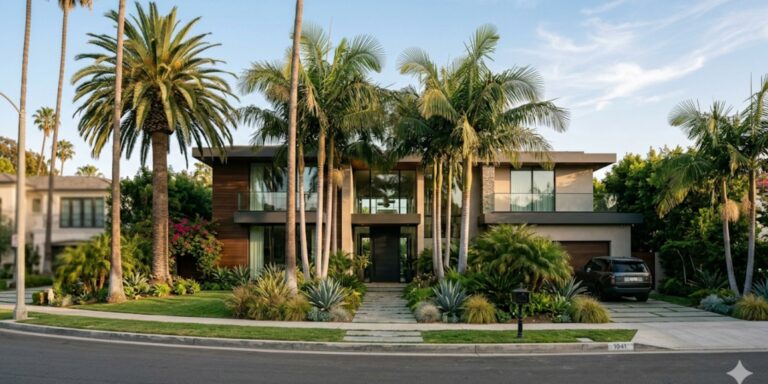
Micro-Location Matters More Than the Neighborhood Name
Most buyers understand that areas like Beverly Hills or Bel Air carry prestige.
High-net-worth buyers go much deeper.
They analyze micro-location.
Two homes located within the same neighborhood can perform very differently depending on:
- Street positioning
- Traffic patterns
- Elevation
- View corridors
- Privacy buffers
- Proximity to commercial activity
For example, in Beverly Hills the Flats remain one of the most stable estate markets in Los Angeles, particularly on quiet interior streets. Homes located closer to major traffic corridors may experience very different buyer demand.
Similarly, in Trousdale Estates, view protection becomes critical. Buyers want to know whether future construction could obstruct city views.
In Venice Beach, proximity to Abbot Kinney Boulevard may increase walkability and lifestyle appeal, but buyers also consider how pedestrian activity impacts privacy.
Micro-location often determines long-term resale strength more than square footage or finishes.
Scarcity and Irreplaceable Land
High-net-worth buyers are extremely sensitive to scarcity.
They look for properties that cannot easily be replicated.
Examples include:
- Oversized flat lots in the Beverly Hills Flats
- Architectural estates in Trousdale Estates
- Bluff-top properties with unobstructed ocean views
- Legacy compounds in Bel Air
- Walk-street homes near the beach in Venice
Scarcity is powerful because supply is permanently limited.
In Beverly Hills, a new luxury home can be built again.
But a double-lot estate on a premier street cannot be recreated.
For wealthy buyers thinking in long time horizons, irreplaceable land supports long-term asset stability.
Architectural Quality and Design Integrity
Architecture plays a major role in luxury property evaluation.
Today’s affluent buyers are increasingly design literate. Many have worked with architects or designers in previous projects and understand the difference between superficial finishes and true architectural integrity.
They often search for:
- Architectural homes in Beverly Hills
- Mid-century modern estates in Trousdale Estates
- Contemporary luxury homes in Bel Air
- Modern coastal homes in Venice Beach
Design matters because it influences both emotional appeal and resale strength.
Timeless architecture tends to perform better across market cycles than trend-driven construction.
Key design elements buyers analyze include:
- Natural light orientation
- Ceiling height and scale
- Indoor-outdoor flow
- Material quality
- Structural layout
- Architectural pedigree
In Los Angeles, design is often part of the property’s identity.
Privacy and Security Considerations
Privacy remains one of the most important factors for affluent buyers.
High-profile individuals, executives, and international investors often require a level of discretion that traditional homes may not provide.
Buyers examine:
- Gated entry
- Distance from the street
- Landscaping buffers
- Neighboring sightlines
- Security infrastructure
- Accessibility of the property
Neighborhoods like Bel Air and Holmby Hills naturally provide greater privacy due to larger parcels and hillside positioning.
In denser areas like Venice or West Hollywood, privacy must be created through thoughtful architectural design.
Elevated living floors, landscaped courtyards, and controlled entry points can dramatically improve privacy.
For many buyers, privacy translates directly into value.
View Premium and Natural Light
Los Angeles is a city where views command a premium.
High-net-worth buyers frequently prioritize view quality over square footage.
Common view preferences include:
- Panoramic city views
- Ocean views along the coast
- Canyon views in hillside neighborhoods
- Sunset-facing orientation
In areas like Trousdale Estates or Pacific Palisades, properties with unobstructed views often retain stronger demand even during slower market cycles.
Natural light is equally important.
Homes with expansive glass walls, open floor plans, and well-positioned windows tend to outperform darker properties.
Light, openness, and horizon views contribute significantly to a home’s emotional impact.
Lifestyle Alignment
Luxury real estate decisions are rarely based solely on financial analysis.
Lifestyle plays a significant role.
Buyers consider how the property aligns with their daily routines and personal identity.
For example:
Brentwood attracts buyers seeking estate-scale homes with strong community infrastructure and proximity to private schools.
Venice Beach attracts entrepreneurs, designers, and creative professionals who value walkability and architectural expression.
Beverly Hills offers global brand prestige and proximity to luxury retail and dining.
Pacific Palisades blends coastal access with a quieter, family-oriented environment.
Lifestyle alignment often drives emotional conviction, which can influence purchasing decisions as strongly as investment logic.
Investment Perspective and Capital Preservation
Luxury real estate is frequently viewed as part of a diversified wealth portfolio.
High-net-worth buyers evaluate properties through the lens of capital preservation.
They analyze:
- Historical price trends within micro-neighborhoods
- Inventory levels
- Days on market for comparable homes
- Liquidity within specific price tiers
The question is not simply whether a property is attractive.
The question is whether it represents a defensible asset over time.
Los Angeles remains one of the world’s most recognized luxury real estate markets, attracting international capital and lifestyle buyers.
This global demand contributes to long-term resilience in prime neighborhoods.
Transaction Strategy and Negotiation Structure
Affluent buyers rarely enter negotiations without preparation.
They typically review:
- Seller motivation
- Market exposure timeline
- Comparable sales data
- Potential off-market alternatives
Offers may be structured strategically with:
- Significant earnest money deposits
- Limited contingencies
- Flexible closing timelines
- Clean contract terms
Luxury sellers often prioritize certainty of close as much as price.
A buyer perceived as credible and financially strong may gain advantage even against slightly higher offers.
International Buyer Considerations
Los Angeles has long attracted international investors.
Buyers from Europe, Asia, and the Middle East frequently consider luxury property in the city for both lifestyle and capital allocation.
International buyers evaluate factors such as:
- Currency exchange conditions
- U.S. tax exposure
- Estate planning structures
- Financing options for foreign nationals
For many global investors, Los Angeles real estate represents a stable asset within a diversified international portfolio.
The city’s cultural influence, entertainment industry presence, and coastal lifestyle contribute to its global appeal.
Risk Assessment
Wealthy buyers approach real estate with disciplined risk analysis.
They evaluate:
- Market cycle positioning
- Insurance costs
- Seismic considerations
- Zoning and land use restrictions
- Coastal Commission regulations in certain areas
For example, coastal properties in Malibu or Venice may involve additional regulatory considerations.
Hillside properties require engineering reports to assess soil stability.
Risk awareness does not discourage acquisition — it simply informs smarter decision-making.
Exit Liquidity
Even at ultra-luxury price points, buyers think about exit strategy.
They ask:
- Who will buy this property next?
- Is the buyer pool broad or narrow?
- Is the design overly personalized?
Homes that balance architectural individuality with broad appeal tend to maintain stronger liquidity.
Highly customized properties may appeal to a smaller pool of buyers.
Liquidity matters even in luxury markets.
Final Perspective
High-net-worth buyers evaluate luxury real estate differently from the average homeowner.
They analyze properties through multiple lenses:
- Micro-location
- Scarcity
- Architectural integrity
- Privacy
- Investment resilience
- Lifestyle alignment
- Risk exposure
- Long-term liquidity
Los Angeles remains one of the most dynamic luxury property markets in the world.
For buyers seeking both lifestyle and strategic asset positioning, neighborhoods like Beverly Hills, Bel Air, Brentwood, Venice, and Pacific Palisades continue to offer compelling opportunities.
The most successful acquisitions are those that combine emotional appeal with disciplined analysis.
In luxury real estate, the properties that retain value across market cycles are rarely the largest or most expensive.
They are the ones that are difficult to replicate, thoughtfully designed, and located in places where demand endures.