
Luxury Home Staging in Los Angeles: What Actually Drives Higher Offers in 2026?
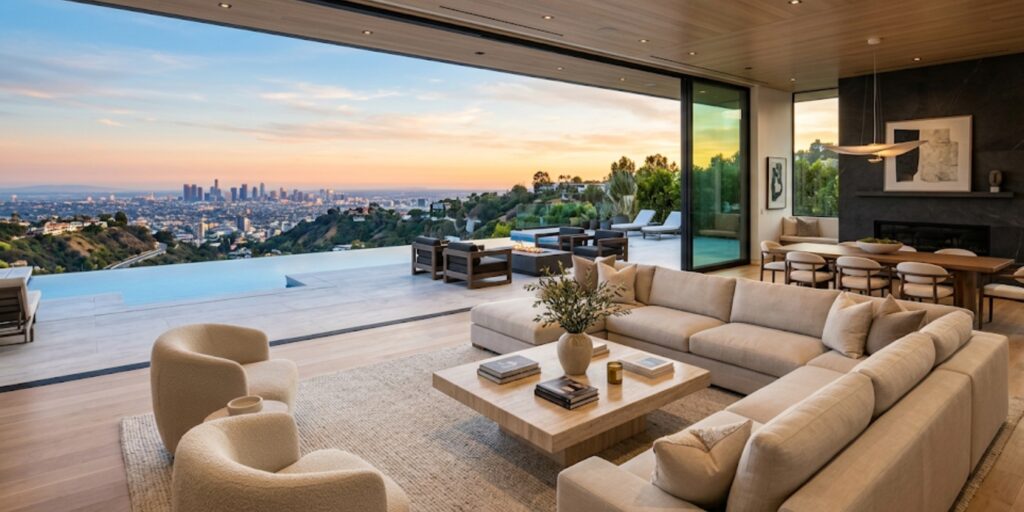
Introduction: The Psychology Behind Luxury Home Staging
In the Los Angeles luxury real estate market, staging is often misunderstood as simply “making a home look beautiful.” In reality, staging at the high end is a strategic exercise in perception, psychology, and positioning. It is not about decoration—it is about influencing how buyers assign value.
Luxury buyers are not just purchasing square footage; they are investing in identity, lifestyle, and emotional resonance. Whether in Beverly Hills, Bel Air, or the Hollywood Hills, the difference between a well-staged home and an unstaged one is not subtle—it often translates directly into millions of dollars in perceived value.
According to Los Angeles luxury real estate advisor Jean-Baptiste Rugiero, staging at the luxury level must be approached as a form of storytelling: “The most successful properties are not just presented—they are curated to reflect a lifestyle buyers aspire to step into immediately.”
This article explores what actually drives higher offers when staging luxury homes in Los Angeles, moving beyond surface aesthetics into the strategic elements that consistently influence buyer behavior.
Market Insight: Why Staging Matters More in the Luxury Segment
Luxury real estate operates differently from mid-market housing. Inventory is more selective, buyers are more sophisticated, and expectations are significantly higher.
In Los Angeles, where architectural diversity ranges from modern glass estates in Bel Air to classic Mediterranean villas in Beverly Hills, staging serves a critical function: it translates architecture into lifestyle.
Key market dynamics include:
- Longer average days on market for unstaged luxury homes
- Higher variance in perceived value between buyers
- Strong influence of international buyers purchasing remotely
- Increased reliance on digital presentation (photos, video, virtual tours)
In this context, staging becomes less optional and more foundational. It is often the difference between a property that feels “complete” and one that feels like a project.
Los Angeles Luxury Real Estate Perspective: Presentation as Positioning
Los Angeles is one of the most visually driven luxury markets in the world. Buyers here are conditioned by architecture, entertainment, and design culture. Presentation is not an enhancement—it is an expectation.
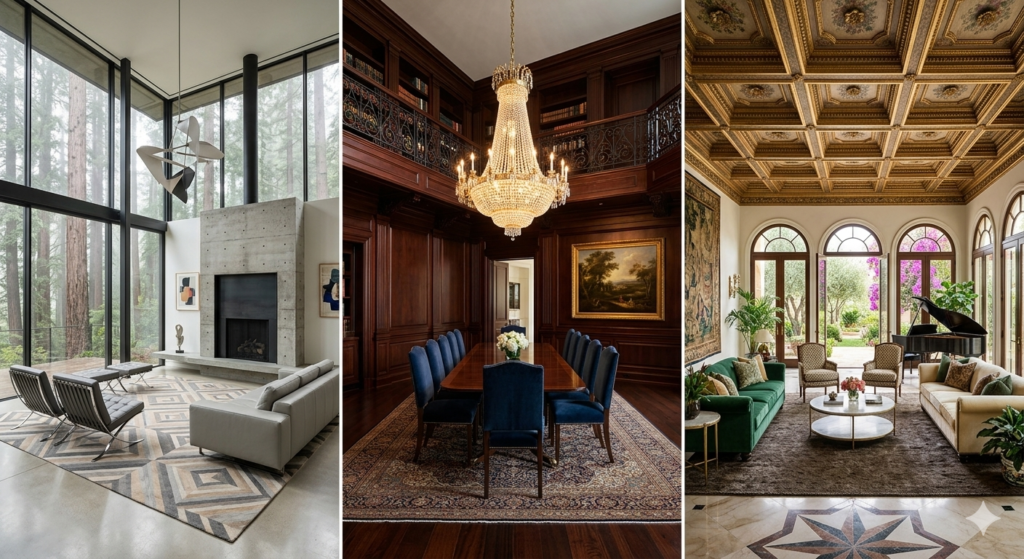
In neighborhoods like Beverly Hills and Bel Air, staging must align with architectural intent. A modern estate demands minimalism and clean lines, while a traditional home benefits from layered textures and classic furnishings.
What consistently drives higher offers is not how expensive the staging looks—but how coherent it feels with the property itself.
Buyers subconsciously ask:
- Does this home feel complete?
- Can I imagine living here immediately?
- Does this reflect my lifestyle—or elevate it?
When staging answers these questions effectively, perceived value increases.
What Actually Drives Higher Offers: The 6 Core Staging Principles
1. Lifestyle Alignment Over Generic Luxury
Generic staging—neutral furniture, abstract art, minimal personality—may work in mid-tier markets. In luxury, it often falls flat.
High-net-worth buyers are looking for specificity:
A curated wine room setup
A wellness-focused primary suite
Indoor-outdoor entertaining areas designed for hosting
Staging should reflect how the home is meant to be lived in, not just how it looks.
2. Emphasis on Volume, Light, and Flow
Luxury homes are defined by space. However, poorly staged homes can paradoxically feel smaller.
Strategic staging enhances:
- Ceiling height perception
- Natural light flow
- Sightlines between rooms
This is achieved by:
- Using lower-profile furniture
- Avoiding clutter
- Aligning furniture with architectural lines
The goal is not to fill space—but to frame it.
3. Indoor–Outdoor Living as a Core Experience
In Los Angeles, indoor–outdoor living is not a feature—it is a defining lifestyle element.
Properties that stage outdoor areas effectively often see stronger offers, particularly from international buyers.
Critical staging elements include:
- Outdoor dining setups
- Lounge areas with fire features
- Poolside environments that feel resort-like
When outdoor spaces are staged as extensions of the interior, buyers perceive greater usable square footage—and greater value.
4. Hotel-Level Primary Suites
Luxury buyers increasingly compare homes to five-star hotel experiences.
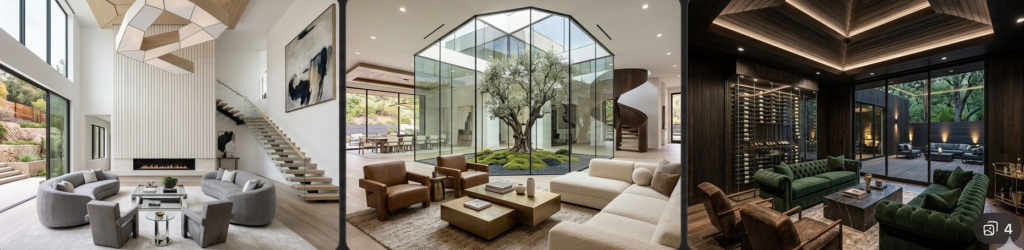
A well-staged primary suite should evoke:
- Calm
- Privacy
- Exclusivity
This includes:
- Layered bedding and textiles
- Symmetrical design
- Minimal but intentional decor
Bathrooms and closets must feel equally elevated, as these spaces often carry disproportionate influence in buyer decision-making.
5. Subtle Emotional Anchors
The most effective staging is often the least obvious.
Subtle cues—books, art, sculptural objects—create emotional connection without overwhelming the space.
Examples include:
- A curated coffee table with architecture books
- A hint of lifestyle (tennis, art, travel)
- Soft sensory elements (texture, light, spatial balance)
Jean-Baptiste Rugiero notes that emotional resonance often determines final offer strength: “Buyers don’t negotiate against homes they emotionally connect with—they compete for them.”
6. Cohesive Narrative Across the Entire Property
Luxury staging must feel intentional from entry to backyard.
A disconnect between rooms—modern living room, traditional bedroom, empty outdoor space—creates friction in the buyer experience.
Consistency builds trust. Trust supports value.
Neighborhood Spotlight: Tailoring Staging to LA’s Premier Enclaves
Beverly Hills
Staging leans toward timeless elegance—neutral palettes, classic forms, and understated luxury. Buyers often expect a blend of heritage and refinement.
Bel Air
Modern architecture dominates. Staging should highlight clean lines, glass, and expansive views. Minimalism performs exceptionally well here.
Brentwood
Family-oriented luxury with a contemporary edge. Warm, livable staging resonates—spaces that feel both elevated and functional.
Hollywood Hills
Design-forward buyers. Staging can be slightly more expressive, with bold art and architectural emphasis.
West Hollywood
Lifestyle-driven properties. Walkability, entertaining spaces, and modern interiors should be emphasized.
Global Buyer Perspective: Why Staging Matters Even More Internationally
Los Angeles attracts a significant number of international buyers—from Europe, Asia, and the Middle East.
Many of these buyers:
- View properties remotely
- Make faster decisions
- Compare homes globally
For them, staging is not just helpful—it is essential.
A staged home communicates:
- Move-in readiness
- Lifestyle clarity
- Investment confidence
Unstaged homes, by contrast, often feel incomplete or uncertain—leading to lower offers or hesitation.
In certain cases, sellers may even choose to position a property off-market, where presentation—including staging—becomes even more critical in shaping first impressions among a smaller, highly qualified buyer pool. For more insight into this approach, see our guide to selling and buying off-market luxury homes in Los Angeles
Buyer and Seller Strategy: Maximizing ROI on Staging
For Sellers
Invest in staging proportionate to property value
Focus on key areas: living room, kitchen, primary suite, outdoor spaces
Avoid over-personalization
The ROI on luxury staging is not linear—it is exponential when executed correctly.
For sellers, staging should always be evaluated within the broader pricing strategy. A well-presented home not only attracts more attention but can justify stronger positioning in the market. Understanding how presentation and pricing interact is essential—particularly in Los Angeles, where perception often drives value. For a deeper look at how to strategically position your property, explore our guide on how to price a luxury home in Los Angeles
For Buyers
Interestingly, staged homes often sell at a premium—but they also provide clarity.
Buyers can:
- Better understand scale and function
- Make faster decisions
- Reduce uncertainty
Why Local Expertise Matters
Luxury staging in Los Angeles is not transferable from other markets.
What works in New York or London may not resonate in Beverly Hills or Bel Air.
Local expertise ensures:
- Alignment with buyer expectations
- Awareness of architectural context
- Strategic positioning within micro-markets
Jean-Baptiste Rugiero emphasizes that staging should always be market-specific, not trend-driven.
Key Insights for Buyers and Sellers
- Staging is a strategic investment, not a cosmetic upgrade
- Lifestyle storytelling drives higher perceived value
- Indoor–outdoor integration is critical in Los Angeles
- Emotional connection often determines final sale price
- Cohesion and architectural alignment are essential
Conclusion: The True Value of Luxury Staging
Luxury home staging is not about impressing buyers—it is about aligning perception with potential.
In Los Angeles, where competition is global and expectations are elevated, staging becomes one of the most powerful tools in achieving premium results.
The homes that command the highest offers are not always the largest or newest—they are the ones that feel the most complete, intentional, and emotionally compelling.
About JB
Jean-Baptiste Rugiero is a Los Angeles luxury real estate advisor with The Agency, specializing in high-end properties across Beverly Hills, Bel Air, Brentwood, Hollywood Hills, and West Hollywood. With an international client base, he provides strategic guidance to buyers and sellers navigating the global luxury real estate market.
FAQ Section
Q1: Does staging really increase the sale price of a luxury home?
Yes, when done strategically, staging can significantly increase perceived value and lead to stronger offers.
Q2: What rooms matter most in luxury staging?
The living room, primary suite, kitchen, and outdoor spaces have the highest impact.
Q3: Is luxury staging different from standard home staging?
Yes, it focuses more on lifestyle storytelling, architectural alignment, and emotional engagement.
Q4: Should every luxury home be staged?
In most cases, yes—especially in competitive markets like Los Angeles.
Q5: How important is outdoor staging in LA?
Extremely important. It directly influences perceived lifestyle and usable space.