
The Bali Shift: Why Global Buyers Are Looking Beyond Traditional Luxury Markets
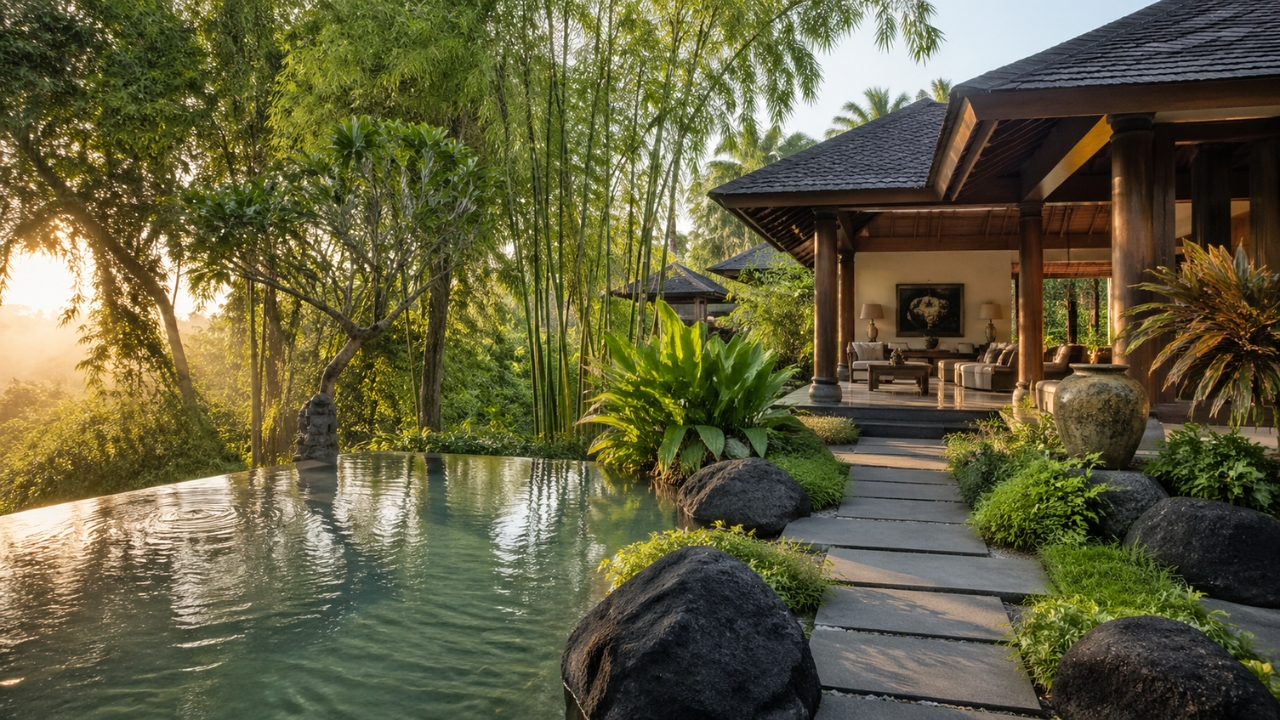
For a long time, the global real estate conversation moved through a familiar circuit. London. Paris. New York. Los Angeles. Geneva. These were the anchors — the markets where global capital found its most trusted footing, where buyers returned generation after generation, where the rules were understood and the values reliably held.
That circuit is still active. But it is no longer the only one.
Over the past several years, a quieter shift has been taking place. Sophisticated buyers — those who have already established themselves in the traditional markets — are asking a different question. Not just where can I invest, but where do I actually want to spend my life? That question is leading more of them to Southeast Asia. And increasingly, it is leading them to Bali.
A Shift in How Global Buyers Think
What is changing is not the fundamentals of real estate strategy. Quality, location, and long-term positioning still matter. What has evolved is the definition of quality. For a growing segment of global buyers, quality of life has become as important as quality of construction. The wellness of the surrounding environment, the pace and texture of daily living, the access to nature and privacy — these are now active variables in high-level real estate decisions.
Bali has positioned itself — largely organically — at the center of this conversation. It is not a manufactured luxury destination. It has no developer-imposed glamour. What it offers is something more fundamental: a place where the environment itself is part of the architecture, where the design ethos of the island and the design ethos of its most thoughtful properties have grown up together.
For buyers who have lived in major global capitals and are now asking what comes next, that matters.
What Bali Offers Beyond the Aesthetic
It would be easy to reduce Bali to its visual appeal. The terraced rice fields, the tropical light, the seamless indoor-outdoor living that its climate makes possible. But that surface-level reading misses the deeper signal.
What Bali offers sophisticated buyers is a particular kind of privacy. Not the privacy of a gated estate behind Beverly Hills hedgerows — though that has its own value — but the privacy that comes from choosing a life that exists somewhat outside the conventional luxury circuit. A different pace. A different measure of success.
There is also a hospitality-grade design culture in Bali that has few parallels. Decades of investment by international architects, boutique resort developers, and design-forward hospitality brands have produced a built environment — especially in areas like Canggu, Seminyak, and Ubud — where residential and resort aesthetics have fully converged. The best properties in Bali are not trying to replicate what exists elsewhere. They are doing something original.
For buyers who have spent time in Bali, this is usually understood immediately. For those who have not, it is difficult to communicate in a listing description.
What Global Buyers Should Understand Before Looking at Bali
An interest in Bali is reasonable. An uninformed approach to acquiring property there is not.
Indonesia's property ownership laws for foreign nationals are complex and differ significantly from what buyers encounter in Western markets or even in other parts of Southeast Asia. The distinction between freehold and leasehold structures, the role of local nominees in certain ownership arrangements, and the legal frameworks governing foreign investment in Indonesian real estate all require serious due diligence.
This is not a market to navigate casually, and it is not one where assumptions from other markets should be carried over. Buyers who approach Bali with the same directness they would apply to a Beverly Hills acquisition often encounter friction that could have been avoided with the right preparation and qualified legal counsel.
Understanding the structure of what you are buying — and what protections that structure does and does not afford — is foundational. Any serious consideration of Bali real estate should begin there.
A Perspective from a Global Advisory Lens
Working with buyers who have a global perspective, I have seen Bali come up with increasing frequency. Not always as a primary acquisition. More often as a second or third property conversation — a lifestyle complement to an existing Los Angeles or European base. The buyer who already has a home in Beverly Hills and wants something that exists at a different frequency.
What strikes me about these conversations is how considered they are. These are not impulse decisions. They are thoughtful recalibrations of how someone wants to organize their life across geographies. Bali is being chosen, in these cases, not because it is exotic but because it is intentional.
The market itself is still maturing. It does not have the liquidity, the transactional infrastructure, or the institutional backing of established luxury markets. That is a factor any buyer should weigh carefully. But the directional signal — from the type of buyer who is paying attention — is clear.
What This Reflects About the Broader Luxury Buyer
Bali's emergence in the global buyer conversation reflects something larger: a reordering of priorities among high-net-worth individuals who are no longer defining luxury purely in terms of address or price per square foot.
The buyers who are looking at Bali are often the same buyers who are deeply thoughtful about their Los Angeles real estate decisions. They share a common characteristic: they think in terms of long-term life design, not just asset accumulation. They are asking what a property adds to their life in terms of experience, privacy, freedom, and daily quality — not just what it does to their balance sheet.
That perspective, whether applied to Beverly Hills or Bali, tends to produce better real estate decisions.
The markets are different in almost every measurable way. But the underlying logic — buy thoughtfully, understand what you are acquiring, align your real estate to how you actually want to live — is consistent across both.
Final Thought
Bali is not for every buyer. It requires a different kind of commitment: to due diligence, to understanding a genuinely different legal and cultural framework, and to accepting a level of market uncertainty that does not exist in more established locations.
But for the right buyer — one who has the flexibility to think globally, the patience to approach it properly, and the lifestyle orientation to genuinely value what it offers — Bali is worth the conversation.
The global real estate map is expanding. Knowing where to look, and how to evaluate what you find, is part of what good advisory work is for.
For a private conversation about global real estate strategy — whether in Beverly Hills, Los Angeles, or international markets like Bali — connect with JB directly.
Get in Touch