
The New Geography of Luxury Living: Why Bali Is Entering the Global Buyer Conversation
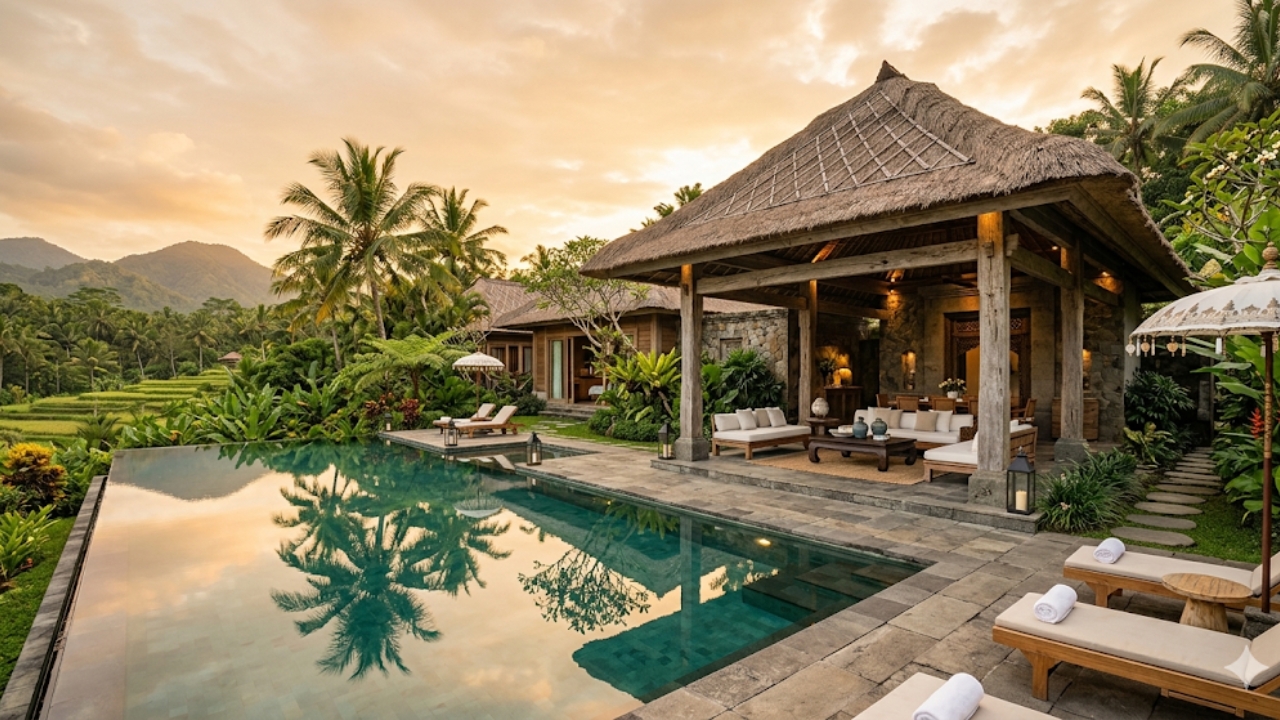
For a generation of global buyers, the geography of luxury living has been relatively fixed. London. Paris. New York. Los Angeles. These cities have long served as anchors for wealth, lifestyle, and real estate capital. But the past several years have introduced a new question into the calculus of sophisticated buyers: is a single location still the right answer?
Bali has entered that conversation — not as a retreat, but as a serious consideration for global buyers rethinking how they structure their lives and their real estate.
The Shifting Geography of Global Wealth
Cross-border capital has always followed a familiar path — toward stability, transparency, and returns. But the definition of returns is evolving. For a growing segment of high-net-worth buyers, return is no longer measured in appreciation alone. It includes quality of life, access to nature, architectural integrity, and the kind of privacy that dense urban markets rarely offer.
Southeast Asia — and Bali specifically — has attracted sustained attention from European, American, and East Asian buyers who are building real estate portfolios across multiple geographies. This is not the trend-driven interest of a moment. It is a structural shift in how globally mobile buyers think about where they place their lives.
What Bali Offers That Traditional Markets Do Not
Bali's appeal is not aesthetic alone, though the landscape — its architecture, its rhythm, its relationship with light and land — is genuinely distinctive. What serious buyers respond to is a combination of factors that are difficult to find elsewhere at a comparable price point.
First, there is scale. Properties in Bali offer a relationship between land, architecture, and indoor-outdoor living that is simply unavailable in most established luxury markets. The spatial generosity — the ability to have a private compound, a garden, a pool, and meaningful architectural space — resonates with buyers accustomed to far less for far more.
Second, there is rhythm. Bali has developed a cultural and architectural identity rooted in craft, hospitality, and considered design. Buyers who have spent time in well-designed Bali villas often describe an experience that feels deliberate — the opposite of the generic luxury that large-scale development tends to produce.
Third, there is the wellness dimension. The demand for spaces designed around health, environment, and slower living is a genuine and growing priority among the buyer profiles most active in international real estate. Bali's built environment — at its best — delivers this naturally.
What Buyers Should Consider
Bali is not a straightforward market, and that distinction matters for any buyer approaching it seriously. Ownership structures, leasehold frameworks, and land classification require careful legal navigation. A buyer who approaches Bali the way they would approach a transaction in Los Angeles or London will encounter differences that demand local expertise.
Equally important is understanding the specific geography within Bali. The island is not uniform. Seminyak, Canggu, Ubud, Uluwatu, and the emerging northern markets each carry different profiles — in terms of design culture, buyer community, access, and long-term positioning. Where a property sits within that landscape matters significantly.
Buyers should also be deliberate about the purpose of a Bali acquisition. Is this a lifestyle asset — a place to spend meaningful time each year? A hospitality-driven investment with rental income potential? A longer-term portfolio consideration as the region continues to develop? Each of these answers leads to a different acquisition strategy.
A Global Advisor's Perspective
I work with clients across Los Angeles, Beverly Hills, and international markets — buyers and sellers who think about real estate as part of a broader wealth and lifestyle picture. What I observe, consistently, is that the most thoughtful buyers are no longer single-market. They are building around a primary residence — often in Beverly Hills or a comparable global hub — and layering in properties in markets that offer something their primary city cannot.
Bali fits that framework naturally for certain buyer profiles. It offers scale, design quality, and a pace of life that complements — rather than competes with — a primary urban residence. For European buyers with an existing presence in Paris or London, and for American buyers anchored in Los Angeles or New York, a considered Bali acquisition adds a dimension that goes beyond the transactional. It adds access.
The due diligence required is real. The expertise required is specific. But for the right buyer, with the right structure, Bali represents one of the more interesting lifestyle and real estate decisions available in the global market today.
The Broader Pattern
What Bali represents is part of a larger shift: the expansion of where sophisticated global buyers are willing to look, and the deepening of what they expect when they look there. The bar for design, privacy, and environmental quality has risen. The appetite for generic luxury has declined. And the willingness to move capital across borders — with proper guidance — has never been stronger.
Los Angeles and Beverly Hills remain among the world's most resilient and sought-after luxury markets. But the buyers most active in those markets are often the same buyers asking thoughtful questions about global diversification. Understanding both conversations — and the intersection between them — is where a global real estate advisor earns their place.
For a private conversation about international real estate strategy — or how a global portfolio approach might complement your position in Los Angeles — connect with JB directly.