
The Architecture of Long-Term Value: What Sophisticated Buyers Recognize in Beverly Hills
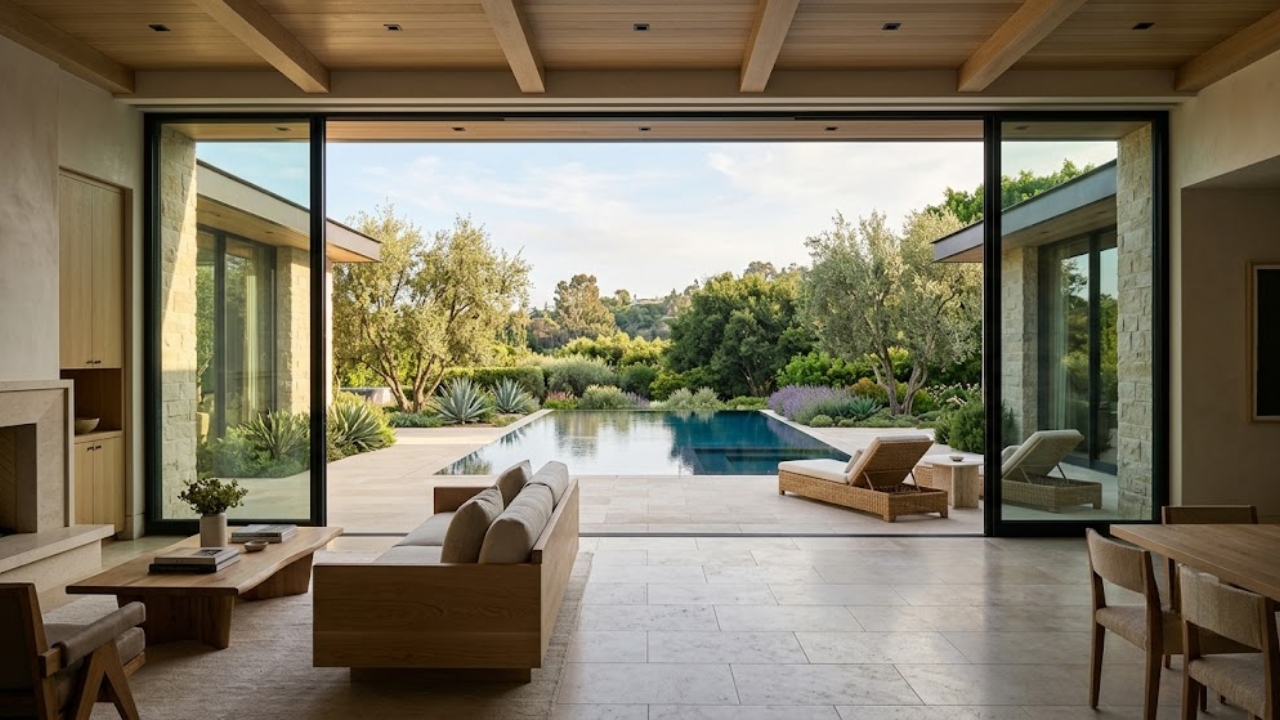
Sophisticated buyers in the Beverly Hills luxury market evaluate architecture differently than most people expect. They are not simply looking for impressive square footage or dramatic first impressions — they are reading a property's design for signals of long-term quality, coherence, and relevance. Jean Baptiste Rugiero has observed this pattern consistently in client conversations: the buyers who bring genuine international experience and a multi-market frame of reference tend to arrive at a Beverly Hills property with a set of design-oriented questions that go well beneath the surface presentation. What they recognize — and what they pass over — reveals something important about what constitutes lasting architectural value in this market.
Design That Speaks to the Long Term
There is a distinction that experienced buyers draw — often intuitively, without articulating it explicitly — between design that is impressive and design that is intelligent. An impressive property can be assembled quickly: dramatic volumes, high-specification finishes, brand-name fixtures, and a visual language borrowed from the most-published properties of the moment. An intelligent property is assembled with intention: every material selected for durability and coherence, every proportion considered within the context of the full composition, every detail expressing a consistent point of view rather than a collection of individual choices.
Jean Baptiste (JB) Rugiero notes that this distinction is especially legible to buyers who have spent significant time in architecturally sophisticated markets — Tokyo, Paris, Singapore, London. These buyers have developed a reference library for design quality that is difficult to fool. They recognize when a material has been selected for its long-term patina versus its short-term visual impact. They notice when a spatial sequence has been designed with the human experience of moving through a space in mind, versus when it has been designed for a photograph. And they understand that the first category tends to hold its quality — and its value — far more reliably than the second.
Indoor-Outdoor Living as an Architectural Statement
Among the specific design considerations that carry particular weight in the Beverly Hills luxury market, the relationship between interior and exterior space consistently ranks among the most important. This is not simply a preference for outdoor access — it reflects a deeper understanding of what California's climate and geography make uniquely possible, and what the most architecturally considered properties have done with that possibility.
Buyers who have evaluated properties across climates and geographies arrive in Beverly Hills with an appreciation for what a true indoor-outdoor connection represents: a deliberate architectural decision to dissolve the boundary between private interior life and the natural environment. When this is done well — when the floor plane extends continuously from interior to exterior, when the glass line is positioned to capture both light and landscape without compromising privacy, when the garden or pool terrace is designed as a genuine room rather than an amenity — it creates a residential experience that cannot be replicated in most markets. When it is done superficially — a glass wall added to a plan that was not conceived with outdoor continuity in mind — experienced buyers recognize the difference immediately.
The properties in Beverly Hills and Bel Air that most consistently attract serious architectural interest are those where the indoor-outdoor relationship was a foundational decision of the design, not an addition to it.
Privacy as an Architectural Quality
Privacy in the Beverly Hills luxury market is often discussed as a feature — gated entry, cameras, security systems. Sophisticated buyers understand it as something more fundamental: an architectural quality that is either built into the design of a property or is not. The difference is consequential, because privacy that has been architecturally resolved — through site positioning, massing, landscaping integration, and the orientation of primary living spaces — does not depend on surveillance infrastructure to function. It is simply present in the experience of the property.
Buyers who prioritize privacy as a genuine residential requirement — rather than a luxury feature — tend to evaluate this quality quickly and accurately. They are looking for properties where the site has been used thoughtfully: where the principal rooms face toward a private courtyard or garden rather than a street, where the approach sequence creates a sense of transition and separation from the surrounding neighborhood, and where natural topography or mature planting has been incorporated as part of the privacy strategy rather than as decoration.
What Buyers and Sellers Should Consider
For buyers evaluating architectural quality in the Beverly Hills market, a few considerations tend to frame the most useful assessment.
Looking for coherence rather than completeness. A property does not need to have every possible feature to hold strong architectural value — but what it does have should feel like it belongs together. Finishes, proportions, material palette, and the relationship between spaces should reflect a consistent design intelligence rather than an accumulation of individually impressive decisions.
Evaluating how the property will age. Some materials and design approaches age gracefully — developing character and depth over time. Others reveal their limitations within a few years. Buyers who think about this question early are better positioned to evaluate a property's long-term relevance rather than its immediate visual impact.
For sellers, understanding how a property's architectural qualities are communicated matters considerably. The aspects of a home's design that hold the most long-term value are not always the ones most immediately visible in photography or a brief showing. Working with an advisor who can identify and articulate these qualities — and who understands which buyers will most appreciate them — is part of what positions a property effectively for the buyer most likely to recognize and act on its value.
Jean Baptiste (JB) Rugiero's Advisor Perspective
JB Rugiero's international background and experience working with buyers from architecturally sophisticated markets shapes how he engages with properties and how he advises clients on what to look for. The buyers he works with most often are not searching for the property that photographs best — they are looking for the property that will hold its quality, its relevance, and its appeal over a meaningful period of time.
Identifying that property in the Beverly Hills and Los Angeles market requires a level of design literacy that goes beyond feature-counting. JB Rugiero brings that perspective to every buyer conversation — and to every seller engagement where communicating architectural value accurately is part of what positions a property for the right outcome.
Frequently Asked Questions
What makes a Beverly Hills property architecturally significant versus simply expensive?
Architectural significance in the Beverly Hills luxury market generally reflects design coherence, material quality, and intentionality — the sense that a property was conceived as a complete work rather than assembled from a menu of premium features. An expensive property may have high-specification finishes throughout without necessarily having a clear design point of view or a considered relationship between its spaces. Sophisticated buyers — particularly those with international design references — tend to recognize this distinction relatively quickly, and it shapes how they value the property and how they approach the decision to acquire it.
How important is indoor-outdoor living when evaluating luxury real estate in Beverly Hills?
Indoor-outdoor living is among the most consistently valued architectural qualities in the Beverly Hills and broader Los Angeles luxury market — in part because it is genuinely enabled by the climate in a way that few comparable markets can offer. However, what buyers are evaluating is not simply the presence of glass walls or outdoor space, but the quality of the architectural relationship between interior and exterior. Properties where this relationship was a foundational design consideration tend to hold their appeal more durably than those where it was added after the fact. Buyers who have lived in multiple climates often arrive with a particularly clear appreciation for what a well-resolved indoor-outdoor connection actually feels like.
Does architectural style affect long-term value in the Beverly Hills luxury market?
Architectural style — whether modernist, Mediterranean, transitional, or otherwise — is generally less important to long-term value than the quality of execution within a given style. A well-executed modernist property and a well-executed Mediterranean property can both hold strong architectural value over time; the determining factor is whether the design was executed with genuine coherence and quality of materials, or whether it followed a style superficially. Buyers who have observed how properties age across different design approaches in different markets tend to evaluate execution quality more than stylistic category.
Final Thought
The most considered acquisitions in the Beverly Hills luxury market are rarely about what a property offers on the surface. They are about what it will continue to offer — in quality, in relevance, in the daily experience of living within it — long after the transaction has closed. The buyers who understand this are looking at architecture as evidence of long-term thinking, and they are finding it in properties where design coherence, indoor-outdoor integrity, and privacy have been treated as foundational rather than incidental. Recognizing that in advance is what allows a buyer to act with confidence when the right property appears.
The information provided in this blog is for educational and informational purposes only and does not constitute legal, financial, or real estate advice. Always consult a qualified California real estate attorney and licensed professional before making any real estate decisions.
Private consultation
For a private conversation about buying, selling, or investing in Beverly Hills, Los Angeles, or internationally — reach out to Jean Baptiste (JB) Rugiero directly.
The Agency profile
Explore Jean Baptiste (JB) Rugiero's current listings, past transactions, and full profile on The Agency.