
Hidden Costs of Owning a Luxury Home in Beverly Hills: What High-Net-Worth Buyers Need to Know
Introduction: Beyond the Purchase Price
For many buyers entering the Beverly Hills luxury market, the focus naturally centers on acquisition—securing the right property, negotiating terms, and navigating a highly competitive landscape. Yet seasoned buyers understand that the true financial picture extends far beyond the purchase price.
Owning a luxury home in Beverly Hills is as much about ongoing stewardship as it is about acquisition. From property taxes and insurance to staffing, maintenance, and lifestyle-driven expenses, the cost structure reflects not only the value of the home but the lifestyle it supports.
According to Los Angeles luxury real estate advisor Jean-Baptiste Rugiero, sophisticated buyers increasingly evaluate properties through a long-term ownership lens—considering both visible and less obvious costs before making a decision.
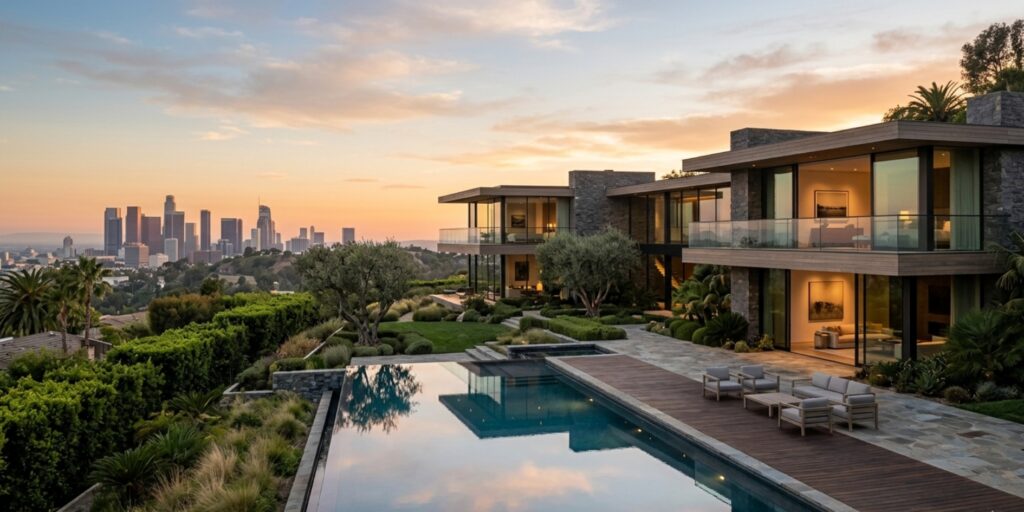
This perspective is particularly important in Beverly Hills, where estates are not simply residences, but private ecosystems requiring continuous investment and management.
For a broader overview, buyers should first understand what to consider before purchasing a luxury home in Beverly Hills, especially when evaluating long-term ownership costs.
Market Context: Why Costs Scale at the Top
Beverly Hills occupies a unique position within global luxury real estate. Properties here are often characterized by expansive square footage, custom architecture, resort-style amenities, and prime location.
As property values increase, so too do the costs associated with preserving and enhancing those assets. Larger homes require more maintenance. Custom materials demand specialized care. Amenities such as pools, wellness spaces, and home automation systems introduce additional layers of operational complexity.
This is not simply a matter of scale—it is a reflection of the expectations tied to luxury living.
Property Taxes: A Foundational Cost
One of the most significant ongoing expenses is property tax. In California, property taxes are generally based on approximately 1% of the assessed value at the time of purchase, with incremental annual increases under Proposition 13.
For a $10 million home, this translates to roughly $100,000 per year—before additional local assessments or bonds are factored in.
However, what many buyers overlook is how reassessment upon purchase can significantly increase tax obligations compared to the previous owner’s rate.
Jean-Baptiste Rugiero notes that understanding property tax implications is essential for international buyers in particular, who may be unfamiliar with California’s system and its long-term financial impact.
California property taxes are governed by statewide regulations, which can be reviewed through the California Board of Equalization.
Insurance: Protecting High-Value Assets
Insurance for luxury homes in Beverly Hills is both more complex and more costly than standard homeowner policies.
Factors influencing premiums include:
- Property value and replacement cost
- Wildfire risk zones
- Security features
- Architectural complexity
High-value homes often require specialized insurance carriers capable of covering custom materials, art collections, and unique architectural elements.
In recent years, insurance availability and pricing in California have become more nuanced, particularly in hillside areas where wildfire exposure is a consideration.
Maintenance & Upkeep: The Reality of Scale
Luxury homes demand a level of maintenance that is often underestimated at the acquisition stage.
Typical annual maintenance costs can range from 1% to 3% of the property value. For a $15 million estate, this could mean $150,000 to $450,000 annually.
Key maintenance categories include:
- Landscaping and groundskeeping
- Pool and spa servicing
- HVAC systems and climate control
- Smart home technology maintenance
- Exterior preservation (stone, glass, wood finishes)
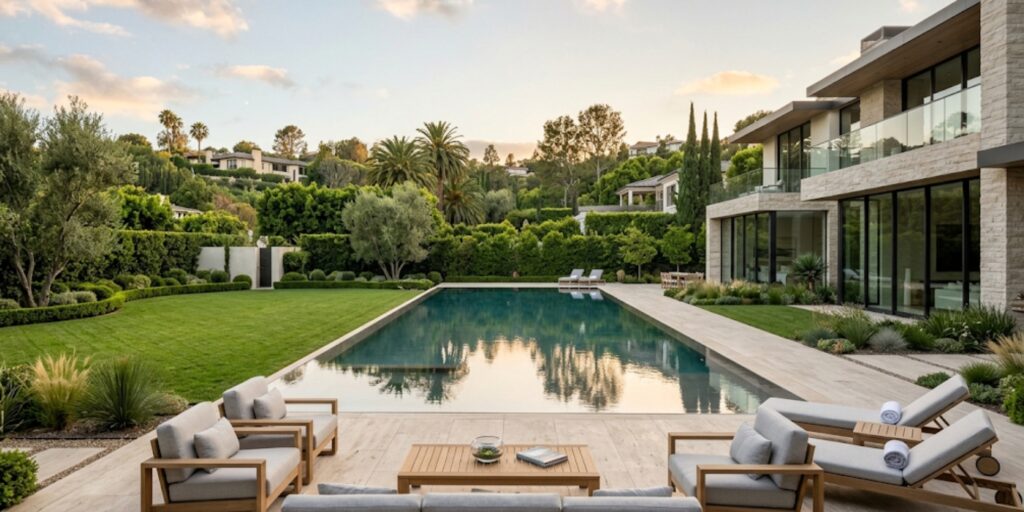
Properties with extensive outdoor living environments—common in Beverly Hills—require year-round attention to maintain their visual and functional integrity.
These financial considerations often become even more important in competitive scenarios, where buyers must balance speed with due diligence. This is explored further in how to win in competitive luxury real estate markets in Los Angeles.
Staffing & Lifestyle Costs
For many high-net-worth homeowners, staffing becomes part of the ownership equation.
Depending on the size and usage of the property, this may include:
- Housekeepers
- Private chefs
- Estate managers
- Security personnel
Even part-time staffing introduces recurring monthly expenses that can easily reach six figures annually.
These costs are not strictly necessary—but they are often aligned with the lifestyle expectations associated with Beverly Hills real estate.
Utilities & Operational Expenses
Large estates naturally consume more energy and resources.
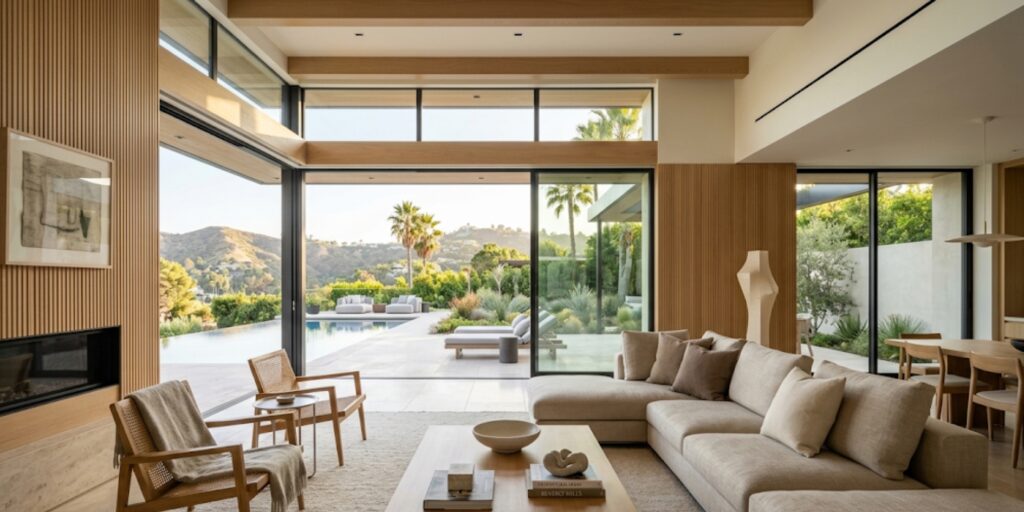
Monthly utility costs can be substantial, particularly for homes featuring:
- Extensive lighting systems
- Heated pools
- Wine cellars
- Home theaters
- Smart home automation
Water usage, especially for landscaping, is another consideration—particularly in California, where conservation policies can influence both availability and cost.
HOA Fees & Community Costs
While many Beverly Hills properties are standalone estates, some luxury homes—particularly in gated communities or newer developments—may include homeowners association (HOA) fees.
These fees can range from modest to substantial, depending on the level of services and amenities provided, such as:
- Security and gate access
- Community landscaping
- Shared amenities
Understanding what is included—and what is not—is essential when evaluating total ownership cost.
Renovation & Capital Improvements
Even newly purchased luxury homes often undergo customization. Buyers frequently invest in:
- Interior redesign
- Technology upgrades
- Wellness features (gyms, spas)
- Outdoor enhancements
In Beverly Hills, where design standards are exceptionally high, renovation costs can escalate quickly.
Permitting, architectural planning, and construction timelines must also be factored into both budget and expectations.
Neighborhood Spotlight: Beverly Hills
Beverly Hills offers a range of micro-markets, each with its own cost dynamics.
- The Flats: Larger lots, traditional estates, higher landscaping and maintenance costs
- Beverly Hills Post Office (BHPO): Hillside properties with views, often higher insurance considerations
- Trousdale Estates: Architectural significance, requiring specialized maintenance
Understanding these nuances is critical, as ownership costs can vary significantly depending on location within Beverly Hills.
Global Buyer Perspective
International buyers are often drawn to Beverly Hills for its stability, prestige, and global recognition.
However, cost structures may differ significantly from those in other global markets.
Currency fluctuations, tax exposure, and cross-border financial planning all play a role in the true cost of ownership.
Jean-Baptiste Rugiero frequently advises international clients to align with tax advisors and legal professionals to ensure a comprehensive understanding of ownership implications in the United States.
Why Local Expertise Matters
Luxury real estate in Beverly Hills is not simply transactional—it is advisory-driven.
Understanding the hidden costs of ownership requires insight into:
- Local regulations
- Property-specific nuances
- Market trends
- Vendor networks
Working with a knowledgeable advisor ensures that buyers approach acquisitions with clarity, avoiding unexpected financial surprises after closing.
Key Insights for Buyers and Investors
- The purchase price is only one component of total ownership cost
- Annual expenses can reach 2%–5% of property value
- Insurance and maintenance vary significantly by location and property type
- Staffing and lifestyle choices can materially impact cost structure
- Early planning leads to more confident acquisition decisions
In some cases, buyers exploring cost-efficient opportunities may also consider off-market luxury homes in Los Angeles, where pricing dynamics can differ from publicly listed properties.
Conclusion: Ownership as a Long-Term Strategy
Owning a luxury home in Beverly Hills represents both a lifestyle decision and a long-term investment.
Understanding the full cost structure allows buyers to approach the market strategically, ensuring that their acquisition aligns not only with their vision—but with sustainable ownership over time.
In a market defined by discretion, quality, and global demand, clarity around these hidden costs becomes a defining advantage.
About JB
Jean-Baptiste Rugiero is a Los Angeles-based luxury real estate advisor with The Agency, specializing in Beverly Hills, Bel Air, Brentwood, Hollywood Hills, and West Hollywood. With an international clientele and a strategic approach to high-value transactions, he provides tailored guidance to buyers and sellers navigating the Los Angeles luxury market.
FAQ Section
What are the hidden costs of owning a luxury home in Beverly Hills?
Property taxes, insurance, maintenance, staffing, utilities, and renovations all contribute to total ownership cost.
How much are property taxes in Beverly Hills?
Typically around 1% of the purchase price annually, plus additional local assessments.
Is maintaining a luxury home expensive?
Yes—annual maintenance can range from 1% to 3% of the home’s value depending on size and features.
Do luxury homes require staff?
Not always, but many owners choose to hire staff for convenience and property management.
Are insurance costs high in Beverly Hills?
They can be, especially for hillside properties or homes requiring specialized coverage.