
Why Home Sales Slowed in January
And What It Really Means for Los Angeles
Real Estate
In February, headlines reported that U.S. home sales slowed in January.
On paper, that sounds concerning.
But if you’re looking at Los Angeles real estate — particularly in Beverly Hills, Bel Air, Brentwood, Venice, or Malibu — the interpretation requires nuance.
Because January’s slowdown was not about demand disappearing.
It was about inventory constraints, pricing recalibration, and buyer selectivity in prime coastal markets.
And in Los Angeles, those dynamics matter more than the headline.
January in Los Angeles Is Structurally Slower
Southern California does not experience harsh winters, but transaction activity still follows predictable seasonality.
High-net-worth buyers travel internationally in December and early January.
Escrows initiated before the holidays often close in late December.
New inventory tends to launch after Presidents’ Day.
That creates a measurable dip in closed sales every January — especially in the luxury tier.
According to historical data from the National Association of Realtors (NAR), January consistently ranks among the lowest months for national transaction volume. But Los Angeles amplifies that effect due to:
- International buyer cycles
- Entertainment industry calendar timing
- Tax planning at year-end
- Second-home acquisition patterns
January softness here is not new. It’s seasonal rhythm.
The Real Story in LA: Limited Inventory, Not Weak Demand
If you want to understand what’s shaping 2026 so far, look at supply.
Los Angeles remains structurally constrained:
- Strict zoning in Beverly Hills and Bel Air
- Limited coastal development in Malibu
- Height and density restrictions in Venice
- Community preservation overlays in Brentwood
Add to that the “rate lock-in” effect — homeowners who secured sub-4% mortgages between 2020 and 2022 are reluctant to sell.
According to new residential construction data from the U.S. Census Bureau, national housing starts have not fully closed the long-term supply gap created after the 2008 housing crisis.
In Los Angeles, land scarcity makes this even more pronounced.
When fewer homes list, fewer homes close — even if qualified buyers remain active.
Transaction volume is not the same thing as demand.
Mortgage Rates: Less Frenzy, More Discipline
Mortgage rates remain higher than pandemic-era lows, as tracked by Freddie Mac’s Primary Mortgage Market Survey.
But in prime Los Angeles neighborhoods, financing plays a different role than in median-priced markets.
In areas like:
- Beverly Hills
- Bel Air
- Brentwood
- Venice
- Malibu
A meaningful portion of transactions are:
- Cash purchases
- Equity-driven acquisitions
- Trust or LLC structures
- Long-term holds
Higher rates have reduced urgency — not eliminated demand.
Buyers are more analytical.
They negotiate more carefully.
They assess long-term value instead of short-term momentum.
That is market normalization — not contraction.
What We’re Seeing in Beverly Hills and Bel Air
In trophy neighborhoods, activity remains selective but consistent.
Well-priced architectural homes still generate interest.
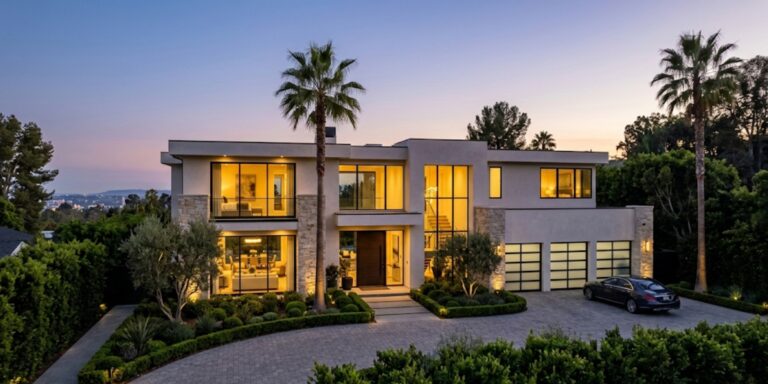
Turnkey properties — especially newly built modern estates with strong privacy — outperform dated inventory.
What has shifted:
- Overpricing no longer gets rewarded
- Stale listings sit longer
- Buyers demand clear value alignment
If pricing reflects 2021 exuberance, activity slows.
If pricing reflects 2026 fundamentals, transactions occur.
This is not a weak market.
It is a pricing-sensitive market.
Venice and Brentwood: Lifestyle Demand Remains
On the Westside, lifestyle continues to drive activity.
Walkability, design-forward homes, and proximity to tech and media employment centers sustain underlying demand.
In Venice, live-work properties and architectural builds continue to attract entrepreneurial buyers and creative executives.
In Brentwood, family-oriented estates with updated finishes still move — especially those near top-tier private schools.
The difference compared to the post-pandemic surge is time.
Homes take longer to sell.
But they still sell when positioned correctly.
Malibu: Scarcity Is Structural
Malibu deserves its own category.
Coastal inventory is permanently limited.
Oceanfront lots are finite.
Cliffside builds face environmental oversight.
New construction is heavily regulated.
In markets defined by land scarcity, volume fluctuations rarely impact long-term value trajectories.
Malibu’s appeal — ocean views, privacy, proximity to Los Angeles — remains intact regardless of short-term monthly data.
International Capital Is Still Watching Los Angeles
According to the National Association of Realtors’ International Transactions Report, foreign buyers continue to view U.S. real estate as a stable long-term allocation.
Los Angeles remains globally recognized for:
- Cultural influence
- Educational institutions
- Climate stability
- Luxury brand identity
Deep rental demand
When global volatility rises, prime U.S. real estate often benefits from capital seeking stability.
Volume may soften temporarily.
International interest rarely disappears.
The Broader Economic Context
The U.S. economy continues to show resilience.
Recent GDP data from the Bureau of Economic Analysis (BEA) shows steady growth trends.
Employment data from the Bureau of Labor Statistics (BLS) indicates continued labor market stability.
Source: https://www.bls.gov
Housing reacts to broader economic stress.
We are not currently seeing systemic financial distress.
We are seeing recalibration.
And recalibration in Los Angeles typically results in stabilization — not collapse.
Why January’s Slowdown May Benefit Strategic Buyers
When transaction volume dips:
- Negotiation leverage increases
- Competition thins
- Inspection contingencies reappear
- Creative structuring becomes possible
For buyers with long-term vision, transitional markets create opportunity windows.
For sellers, it reinforces the importance of precision — pricing, presentation, and global exposure.
In a measured market, strategy outperforms speed.
The Long-Term View on Los Angeles Real Estate
Over decades, Los Angeles real estate has rewarded patience.
Land scarcity, global appeal, and lifestyle demand provide structural support.
Short-term fluctuations in monthly sales numbers do not define generational wealth outcomes in prime coastal markets.
January’s slowdown reflects:
- Seasonal timing
- Inventory limitations
- Pricing sensitivity
- Buyer discipline
It does not reflect evaporating demand.
Final Perspective
Headlines tend to compress complex markets into simple narratives.
Los Angeles is not simple.
It is layered, globally connected, and supply-constrained.
If you are considering buying or selling in 2026, the conversation should focus on:
- Positioning
- Timing
- Negotiation leverage
- Long-term value alignment
Transitional markets reward preparation.
And in Los Angeles, strategy has always mattered more than speed.