
Luxury Real Estate as a Lifestyle Asset: How Sophisticated Buyers Think About Long-Term Value
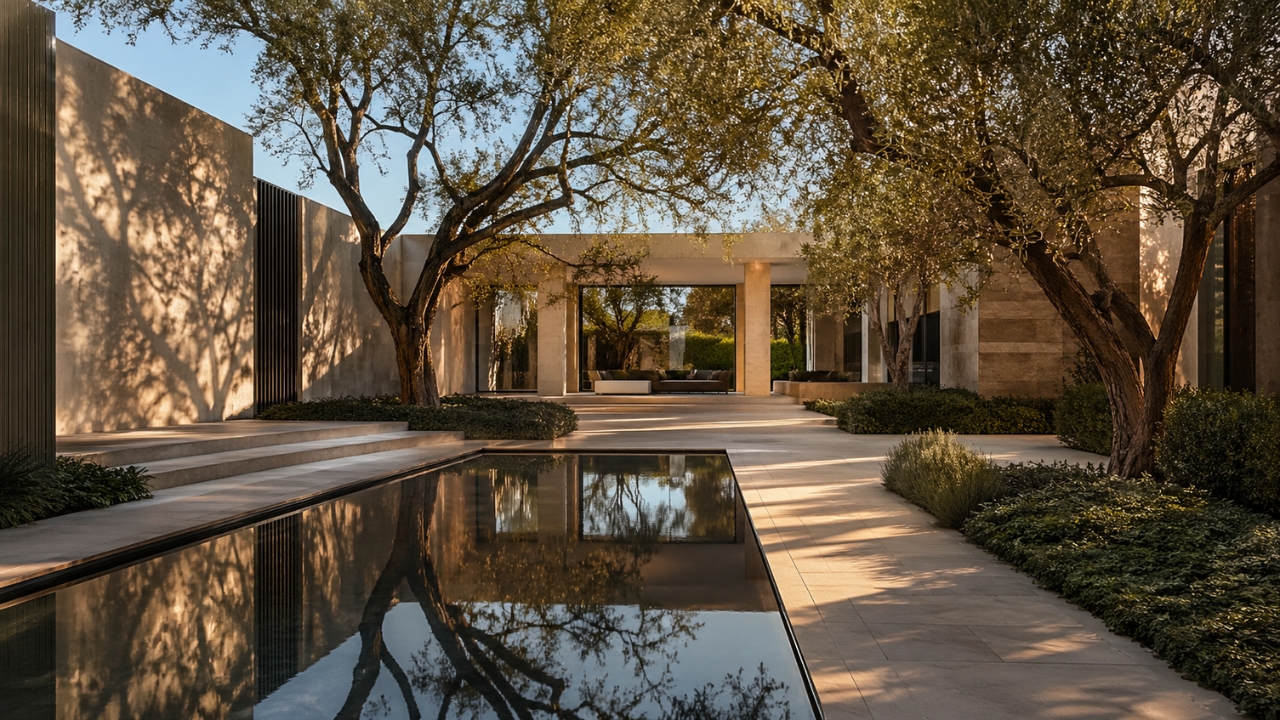
There is a quiet shift underway in how the most discerning buyers approach luxury real estate. It is not driven by headlines or interest rate cycles. It is driven by a longer view — one that treats a well-positioned property less as a transaction and more as a deliberate act of capital allocation and lifestyle design.
This perspective has always existed among a certain kind of buyer. But it is becoming more explicit, and more deliberate, as global wealth continues to seek assets that hold meaning beyond their market price.
Real Estate as More Than Shelter
At its most fundamental level, a home serves a practical purpose. But at the level of the Beverly Hills market, or a private compound in Bel Air, or a curated estate in Holmby Hills, the conversation changes entirely. These are not purchases made out of necessity. They are decisions made with intention.
The buyers I work with — whether they are based in Los Angeles, Paris, Singapore, or Shanghai — are thinking about a different set of questions. How does this property fit into the way I want to live? What does it do for my family's long-term security? How does it perform as part of a broader private wealth strategy? And perhaps most importantly: is this the kind of asset that holds its value when markets become uncertain?
These are not questions a transaction-focused approach can answer. They require a different kind of conversation.
The Lifestyle Asset Framework
What defines a lifestyle asset in real estate? It is a property that delivers value across multiple dimensions simultaneously.
There is the experiential value — the privacy, the design, the quality of light, the relationship between indoor and outdoor space, the sense of arrival. These are not incidental features. They are the reasons sophisticated buyers pay a premium, and the reasons those buyers do not regret that premium over time.
There is the locational value — the irreplaceability of a specific address, a particular view, a position within a city or hillside that cannot be replicated. In markets like Beverly Hills, this scarcity is real. The supply of genuinely well-positioned properties remains structurally limited, even as demand from both domestic and international buyers continues to grow.
And there is the strategic value — the understanding that a carefully selected property in the right location, at the right moment, can serve as both a home and a long-term store of value. Not a speculative bet. A reasoned, private decision about where to place capital in a world of increasing uncertainty.
What Global Buyers Understand
International buyers — particularly those navigating cross-border acquisitions from Europe or Asia — often arrive at this framework naturally. They have grown up in markets where real estate is understood as a generational asset, not a commodity to be traded. A family property in Paris or a legacy estate in the countryside of Provence is held across decades, not sold at the next cycle peak.
When those buyers look at Los Angeles — at Beverly Hills, at Brentwood, at the quieter streets of Trousdale Estates — they bring that same long lens. They are not asking what the property will be worth in two years. They are asking whether this is the kind of address that will still matter in twenty.
That perspective tends to produce better decisions. It filters out noise. It focuses attention on the properties that genuinely warrant consideration, and it creates clarity around the ones that do not.
Portfolio Diversification and the Private Wealth Lens
For high-net-worth individuals and family offices, luxury real estate in Los Angeles represents something specific: a tangible, non-correlated asset in a portfolio that may otherwise be heavily weighted toward financial instruments.
This is not a new idea. But it has taken on greater relevance as equity markets become more volatile and the appeal of physical assets — real property, with a defined location, a defined character, and a private title — becomes more apparent.
Beverly Hills, in particular, has demonstrated a historical resilience that is not accidental. It reflects the depth of demand from both domestic and global buyers, the consistent quality of the inventory, and the underlying scarcity that no amount of development can fully address. These are structural characteristics. They do not guarantee any specific outcome, but they do provide a rational foundation for long-term confidence.
The Advisor's Role in a Lifestyle Asset Decision
This is where the role of a trusted advisor becomes genuinely important. A lifestyle asset decision is not a search. It is a strategy. And strategy requires someone who understands not just the market, but the buyer's priorities, timeline, and long-term objectives.
My approach to working with buyers — whether they are acquiring their first Los Angeles property or expanding an existing portfolio — begins with understanding what they are actually trying to accomplish. The right property is not the one with the best specifications on paper. It is the one that aligns with a specific vision of how life should be lived, and where long-term value and personal meaning intersect.
That alignment, when it is right, is evident. The buyer knows it immediately. And so do I.
A Considered Approach to Entry
Timing is often the first question. The luxury market in Los Angeles does not follow the same rhythms as the broader residential market. Well-positioned properties — those with genuine architectural presence, thoughtful design, and irreplaceable locations — tend to attract serious buyers regardless of the macro environment.
What changes with the cycle is the quality of the conversation. In quieter moments, buyers have more space to think clearly, to evaluate without competition, and to negotiate from a position of considered judgment rather than urgency. These are often the moments that produce the most meaningful acquisitions.
For buyers who have been watching the market, waiting for the right alignment of property, pricing, and timing, the current environment offers exactly that kind of space.
Final Thought
The most enduring luxury real estate decisions are rarely the loudest ones. They are made privately, with precision, by buyers who have taken the time to understand what they are really acquiring — not just square footage and a zip code, but a position in a market that has consistently rewarded long-term conviction.
That is the lens I bring to every conversation. Not urgency. Not hype. A clear-eyed view of what the right property can mean over time, and the patience to find it.
If you are evaluating a luxury real estate decision in Los Angeles or internationally, JB can help you think through the strategy with discretion. Reach out directly for a private conversation.