
Beyond Square Footage: What Discerning Buyers Read in a Property's Architecture
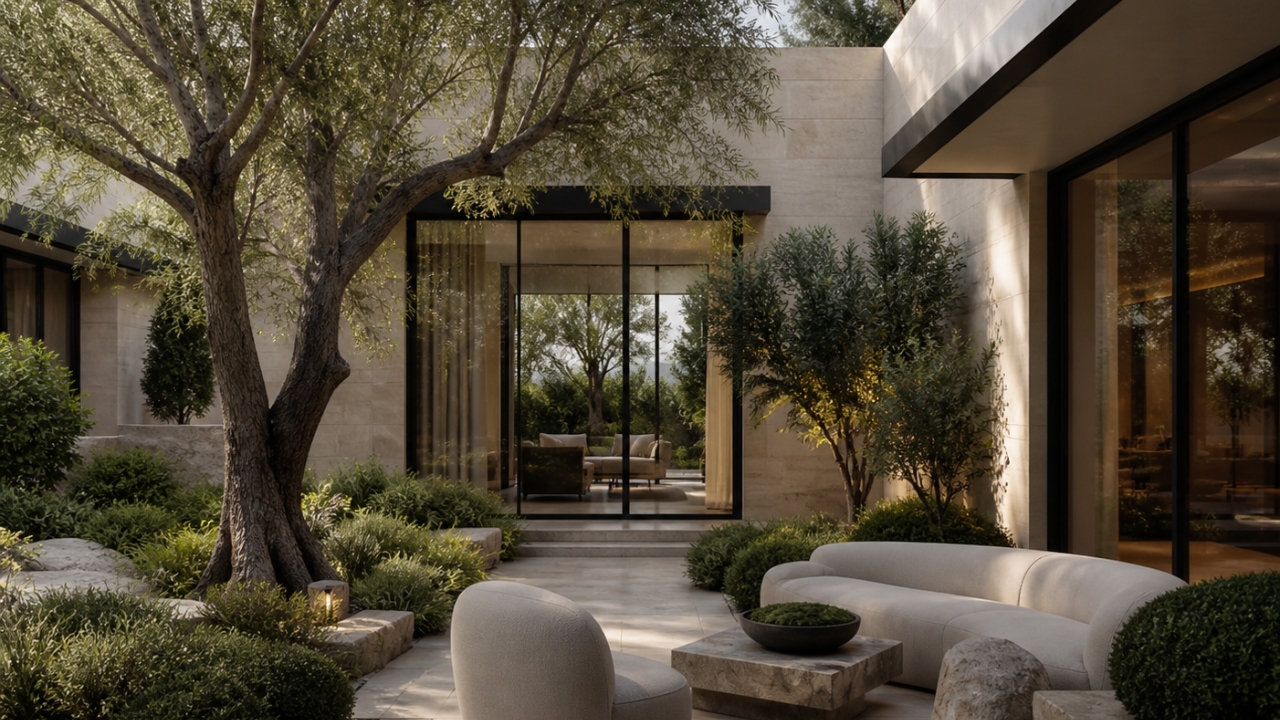
In luxury real estate, the most significant decisions are rarely made on square footage alone. Sophisticated buyers read a property's architecture the way they might read a business — looking for structure, proportion, and intention. What they find in those first moments often shapes everything that follows.
This is something I have observed consistently across markets, whether working with buyers in Beverly Hills, Bel Air, or with international clients evaluating Los Angeles from abroad. The architectural language of a property communicates long before a buyer reviews the disclosures or requests a formal tour. It either builds confidence or quietly raises questions.
The First Signal Is Always Proportion
Before a buyer steps inside, they are already evaluating. The relationship between the structure and its site — the way the façade addresses the street, the scale of the entry, the way the roofline meets the sky — all of this is processed almost instinctively. Sophisticated buyers are often not consciously aware of this analysis. But they feel it.
Proportion is one of the most underappreciated indicators of long-term value. A property that is well-proportioned to its land reads as considered — someone made deliberate decisions about what this place should be. That quality of intention, whether from the original architect or a careful renovation, tends to hold value over time in ways that trendy finishes simply cannot.
In Beverly Hills and the adjacent canyons, I have seen properties with extraordinary specifications — imported stone, bespoke millwork, premium technology integrations — that felt fundamentally unresolved at the level of form. And I have seen far simpler structures that commanded genuine attention because their proportions were right. Buyers with a developed eye always notice the difference.
Light as Architecture
The quality of natural light in a property is not a passive feature. It is an architectural decision, and discerning buyers treat it as one.
How light enters a home — the orientation of the structure, the size and placement of openings, the relationship between ceiling height and window proportion — determines how a space feels at different hours of the day and across different seasons. A room with well-considered light changes throughout the day in ways that feel alive. A room where light was not carefully considered can feel static, or worse, unsettled.
For international buyers in particular, light carries cultural weight. Many of my French and European clients arrive with a strong intuition around this — they have lived in environments where natural light in a residence is both scarce and highly valued. When they experience a property in Beverly Hills or the Hollywood Hills where morning light moves across a well-scaled room at the right angle, the response is immediate.
The Indoor-Outdoor Connection
Los Angeles has always offered something relatively rare in the global luxury market: a climate where the boundary between interior and exterior living can dissolve almost entirely for much of the year. The most architecturally resolved properties in this market treat the indoor-outdoor connection not as an amenity, but as a structural principle.
This matters to buyers for reasons that go beyond lifestyle preference. A property designed with true integration between interior volumes and exterior spaces feels larger than its stated square footage. The grounds become part of the living experience, not a backdrop to it. For buyers from markets where that kind of relationship between a home and its landscape is simply not possible — urban centers in Asia, continental Europe, high-density cities — this quality carries significant weight in the decision.
In my experience, properties where the architecture and the landscape were designed in conversation with each other hold their positioning more reliably than those where the outdoor spaces feel added on. Buyers sense this immediately, even when they cannot articulate exactly why.
Privacy Is Not an Afterthought
At the upper end of the Los Angeles market, privacy is not simply a selling point. It is an architectural value — one that shapes how a property was conceived, and one that a discerning buyer evaluates carefully.
Privacy in architecture is expressed in many ways: the relationship of the structure to its neighbors, the screening provided by mature landscaping, the placement of primary rooms away from sight lines, the positioning of the motor court and entry sequence. The most thoughtfully designed properties in Beverly Hills and Bel Air treat privacy as part of the architectural program, not as an afterthought addressed with hedges and gates alone.
For high-net-worth buyers — and especially for international buyers who value discretion as a way of life — a property that communicates genuine privacy at the architectural level is meaningfully different from one that achieves it through remedies applied after the fact. That difference shows up in both buyer interest and in long-term value.
An Advisor's Perspective
When I work with buyers in this market, one of the first conversations I have is about what they are actually evaluating. Price, square footage, and amenities are the visible data — they are what shows up on a listing sheet. But architectural quality, light, proportion, the integrity of indoor-outdoor planning, and the depth of privacy are the factors that determine whether a property holds its character over time.
These are the things I am watching for in every property I bring a client to see. And when I work with sellers, one of the most valuable conversations we can have is about how to articulate these qualities clearly — so the right buyer can recognize what they are acquiring.
In a market as layered as Los Angeles, with buyers arriving from global markets with sophisticated design sensibilities, these architectural qualities are not secondary details. They are often the deciding factors.
Final Thought
The most enduring properties in Beverly Hills and Los Angeles are not simply the largest or the most extensively renovated. They are the ones where someone, at the point of design, made considered decisions about proportion, light, connection to the landscape, and the experience of moving through the space.
Those decisions are still visible decades later. And buyers who understand what they are looking for will always find their way to properties that got those things right.
For a private conversation about your next move in Los Angeles or abroad, connect with JB directly.
Get in Touch